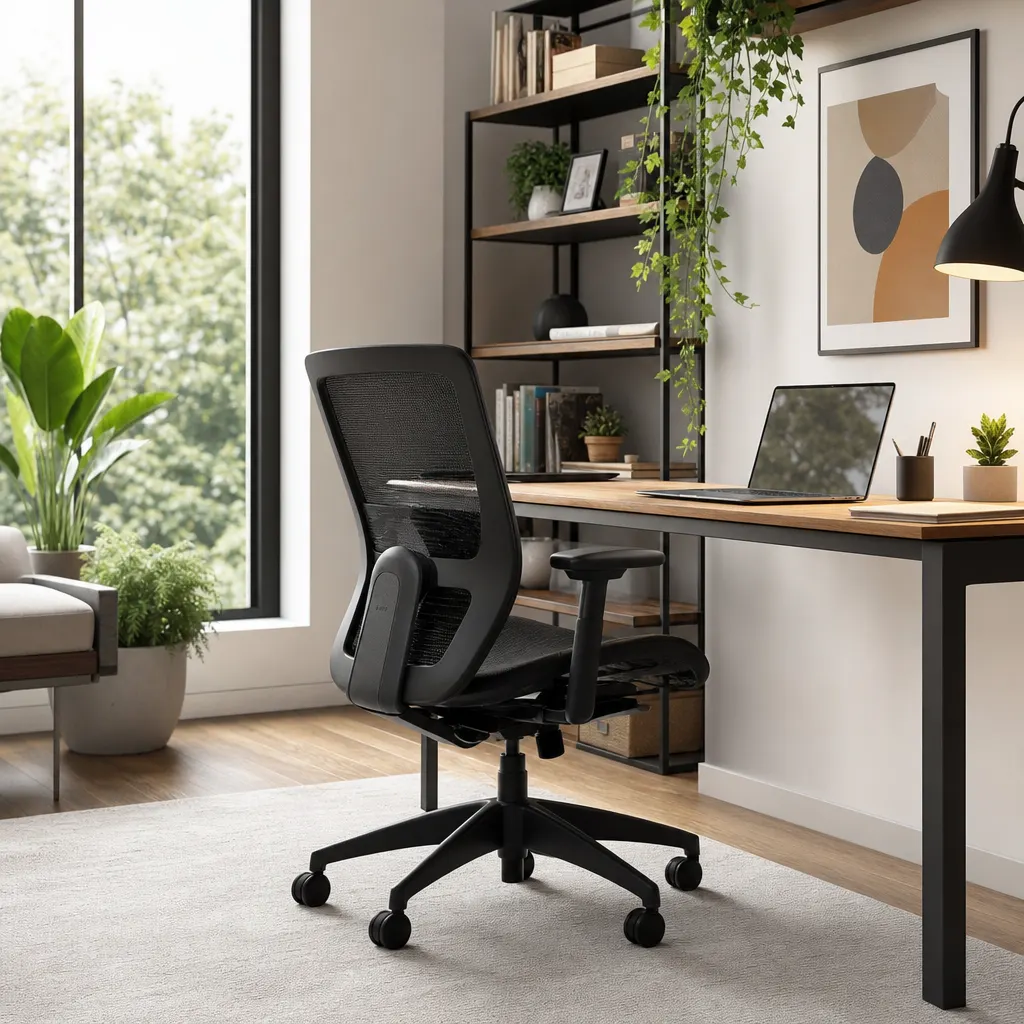
The market for budget ergonomic chairs is booming, promising the comfort of a high-end throne for a fraction of the price. But when you're navigating options under $200, it's easy to end up with a chair that's more about looks than longevity or lumbar support. A cheap chair that you have to replace in a year isn't a good deal—it's a false economy.
This post contains affiliate links. We may earn a small commission at no extra cost to you. TL;DR: A good budget ergonomic chair is possible if you prioritize core adjustments (height, lumbar) and understand the trade-offs you're making on materials and advanced features. The goal is to find a chair that's cheap in price, not in quality.This guide isn't a list of top picks. Instead, it’s a framework to help you analyze any budget ergonomic chair and decide if it's a savvy investment for your home office or just another piece of future landfill.
The "Good, Fast, Cheap" Triangle of Ergonomics
In manufacturing, there's a saying: "Good, fast, cheap—pick two." The same applies to office chairs. A top-tier chair like a Herman Miller is good (highly adjustable, durable) but not cheap. A mystery chair from a dropshipper might be cheap and fast (arrives tomorrow!) but is rarely good.
When you shop for a budget ergonomic chair, you are specifically choosing "cheap." This means you will have to make compromises on "good." The key is making the right compromises. Typical trade-offs include:
- Durability: Cheaper components, like plastic bases instead of steel and lower-density foam, may wear out faster.
- Adjustability: You'll get basic adjustments but miss out on granular controls like seat depth, 4D armrests, or synchro-tilt mechanisms.
- Materials: The mesh might be less supportive, and the fabric may not be as resilient as what you'd find on a premium model.
Understanding this from the start helps you manage expectations. You're not looking for a $1,500 chair for $150. You're looking for the best possible support and durability that $150 can buy.
Core Features You Should Never Compromise On
Even on a tight budget, some features are non-negotiable for protecting your health. If a chair you're considering lacks any of these, walk away.
- Seat Height Adjustment: This is the most basic ergonomic feature. Your feet need to rest flat on the floor with your knees at a 90-degree angle. Every decent office chair has this.
- Meaningful Lumbar Support: The chair must have a curve that supports your lower back. Ideally, it's height-adjustable so you can position it correctly. A fixed "lumbar curve" that hits the wrong spot is useless.
- A Stable 5-Wheel Base: This provides stability and prevents tipping. Four-legged office chairs are not designed for the dynamic movement of a workday.
- Basic Swivel and Tilt: You need to be able to rotate freely and lean back, even if it's a simple rocking-tilt mechanism. This encourages movement throughout the day.
A chair without these fundamentals isn't an ergonomic chair—it's just a chair.
Where Budget Chairs Cut Corners (And When It's Okay)
To reach a low price point, manufacturers have to make cuts. Here are the common ones and how to decide if they matter for you.
- Armrests (2D vs. 4D): High-end chairs have 4D armrests (height, width, depth, pivot). Budget chairs usually have fixed or 1D (height-only) armrests. Is it okay? Yes, if you can still achieve a 90-degree elbow angle and keep your shoulders relaxed. For many users, height adjustment is enough.
- Tilt Mechanism (Synchro vs. Center): Premium chairs use a "synchro-tilt" where the seat and back recline at different ratios, keeping your feet on the floor. Budget chairs use a "center-tilt" that's more like a simple rocking chair. Is it okay? For most, yes. While less sophisticated, a basic tilt with tension control is far better than no tilt at all.
- Seat Depth Adjustment: The ability to slide the seat pan forward or back is a godsend for very tall or short users, but it's one of the first features to be cut. Is it okay? Maybe. Check the seat depth measurement. If you're of average height, a fixed depth is often fine.
- Warranty: A premium chair might have a 10-12 year warranty. A budget chair will likely have a 1-year warranty. Is it okay? It's a risk. This is a direct reflection of the manufacturer's confidence in their product's durability.
Red Flags: When "Budget" Just Means "Bad"
Some corners shouldn't be cut. If you see these warning signs, it's a good indicator that the chair is cheap in the worst sense of the word.
- Exaggerated "Gaming" Features: Racing-style bucket seats and fixed "support" pillows are often ergonomic theater, not functional design. Read our guide on ergonomic chairs versus gaming chairs for more.
- Low Weight Capacity: Check the specs. A capacity under 250 lbs can be a sign of a weak gas lift and a flimsy base.
- Vague Descriptions: Look for specifics. "Comfortable chair" is marketing fluff. "Height-adjustable lumbar support from 18-21 inches" is a feature.
- Overwhelmingly Negative Reviews Mentioning "After 6 Months": Pay close attention to reviews that discuss long-term durability. Anyone can love a chair on day one. The real test is how it holds up. An affordable option is the SIHOO Ergonomic Office Chair, which often gets mentioned for its value.
FAQ: Budget Ergonomic Chairs
How much should I really spend on a budget ergonomic chair?
The sweet spot for a good-value budget chair is typically between $150 and $300. Below $150, you're making significant compromises on durability and support.
Are gaming chairs a good budget alternative?
Generally, no. Most are designed for aesthetics over ergonomics, with features like winged backs and bucket seats that restrict movement. A simple, adjustable office chair is almost always a better choice for productivity. You can often find better deals on a used high-end office chair than a new gaming chair.
Can I upgrade a cheap chair to make it better?
Yes! A separate lumbar pillow or a high-quality seat cushion can dramatically improve a basic chair for under $50. This is a great strategy if your budget is extremely tight. A well-chosen lumbar support pillow can make a huge difference.
The Bottom Line
Buying an ergonomic chair on a budget isn't about finding a secret, perfect chair for $99. It's about being an informed consumer. By focusing on the non-negotiable core features and understanding exactly which corners are being cut, you can find a chair that offers solid support and value without breaking the bank. Prioritize adjustability over flashy features, and you'll make a purchase that your back—and your wallet—will thank you for.